Assignment 2
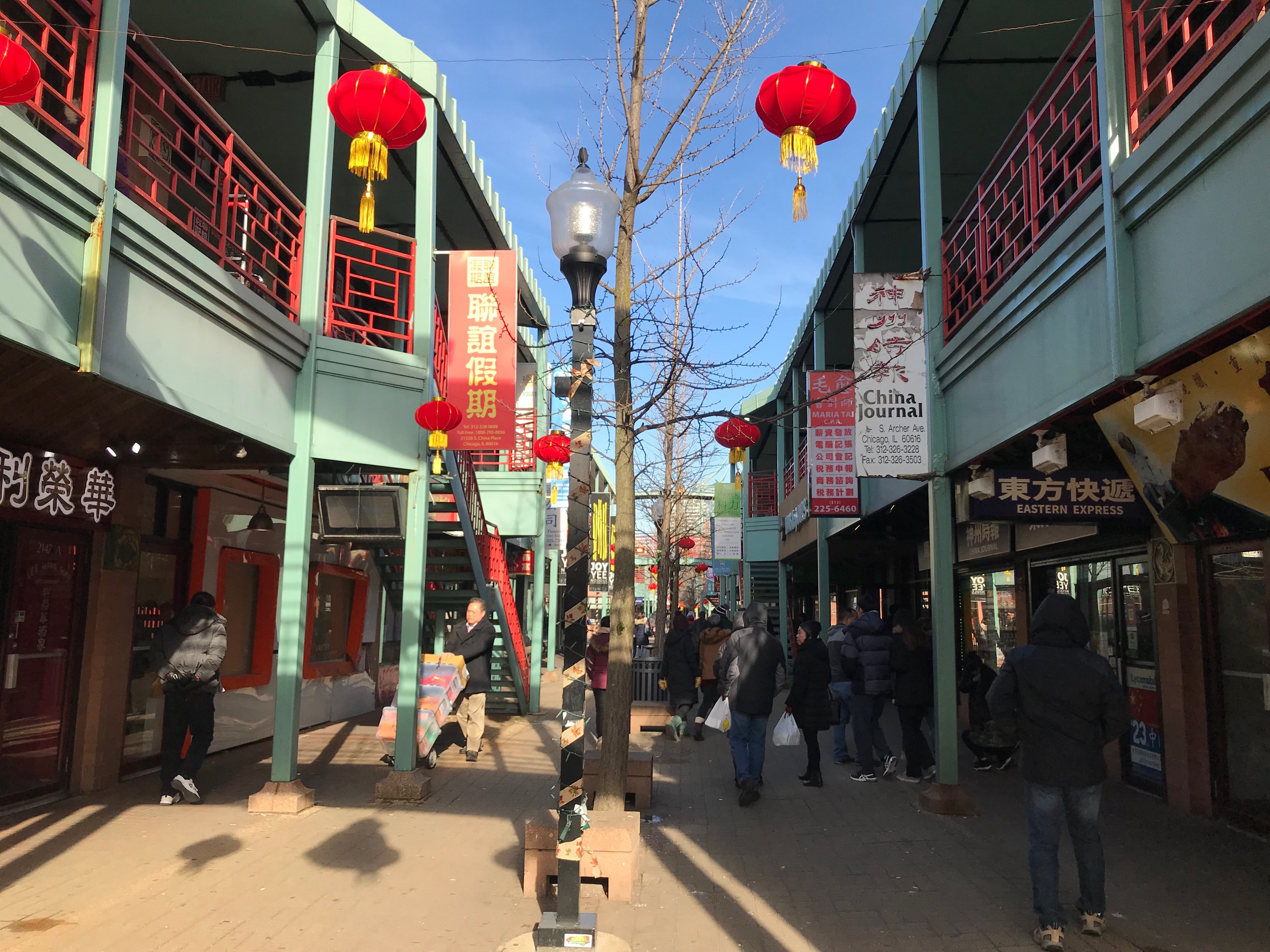
For many, visiting Chicago’s chinatown means visiting a flashy tea place or eating at a trendy dumpling restaurant. For the more adventurous, you could even go to a dim sum restaurant to choose from a variety of buns and other small-portioned dishes. But my family often chooses a restaurant on the lesser-visited top floor of Chinatown. Above the nice courtyard filled with zodiac statues and unadorned with the decorational gazebos and red-and-turquoise arches of the lower level, the pathway that winds around the top floors of the Chinatown business is flanked by darkened windows. Instead of glowing store signs and tacky gift shops, there are bookstores and office supply stores and a Kumon nestled into a small corner.
If you follow the path towards Wentworth Avenue, you can visit the small restaurant my family frequents. The name, written above the door in Chinese, escapes me- even a search on google maps pulls up no registered restaurant for this location. It’s on a corner, so two walls have expansive, plexiglass windows that look out onto the darkened alley behind chinatown and the street beyond it. There’s a quiet jingle of the bells hung on the door as you walk in.
There’s a waitress sitting near the door on her phone, and she glances up as you come in. She immediately speaks in Chinese to ask how many people we have, although she’d be able to switch to English if you said you didn’t understand. After grabbing the correct amount of menus, she silently leads us to our table, still on her phone. She puts down the menus and nods at us, leaving again to retrieve some waters.
The booth we’re in has dark, leather-covered plush seats; there’s some small tears in the fabric, and you can make out spongy fluffs from within the chair. Since we only have a table of four, there’s no lazy susan on the table, but the large round tables in the center of the restaurant all have the spinning disk in the middle. The walls are white and are lined with printed pieces of paper with Chinese scrawled on with Sharpie- they list special deals and popular menu items, and some have pictures of the food that look like they’ve been taken from a cellphone camera. If you were to compare the items on the wall to the items on the menu, you would find many more types of dishes on the walls.
The restaurant plays no music, but it has three small TV screens on three of its walls. Each TV is soundless and is playing different stations; one is a Chinese news channel, one is a game show, and one seems to constantly be playing ads. The only sounds is the constant drone of laughter and talking from neighboring tables- which, with the lack of decorations and open floor plan, is very easy to hear- and the usual racket from the kitchen. A glance at the menu shows rows upon rows of different dishes, but upon a closer look the selection of meals seems to focus on a limited number of ingredients. This reflects a prevalent quality in a lot of Asian cooking; reusing and reinventing the same set of key ingredients.
Our waitress is back to take our order. She spares no words, jotting down our orders before retrieving our menus, saying “Ok”, and heading back to the kitchen. To people used to American-style restaurants, going to a casual, authentic Chinese restaurant many times does not fit their preferred restaurant qualities- cheerful waiting staff, visually pleasing decorations, and calm atmosphere are not a priority in places like the Chinese restaurant my family visits. Some find this off putting, and it has led to a stereotype of Chinese waiters and waitresses seeming to be rude or inconsiderate. But for these casual Chinese restaurants, bubbly employees and the ‘atmosphere’ of the space is much less important than the food being served and the company of the people around your table. The absence of music, lack of interference of waiters and waitresses, and communal sitting areas (with large, round tables and the lazy susan), all encourage conversation and a sense of community with the people you’re sitting with. And it’s easy to reach out to a waiter and waitress for conversation; the customer just has to initiate it. When my family brings our grandparents to dine with us, the cooks will often come out and talk about their hometowns, sometimes pulling up a seat to chat longer. Casual Chinese restaurants aim to provide exactly what they advertise; a place for food and casual conversation.
 Italy Imagined